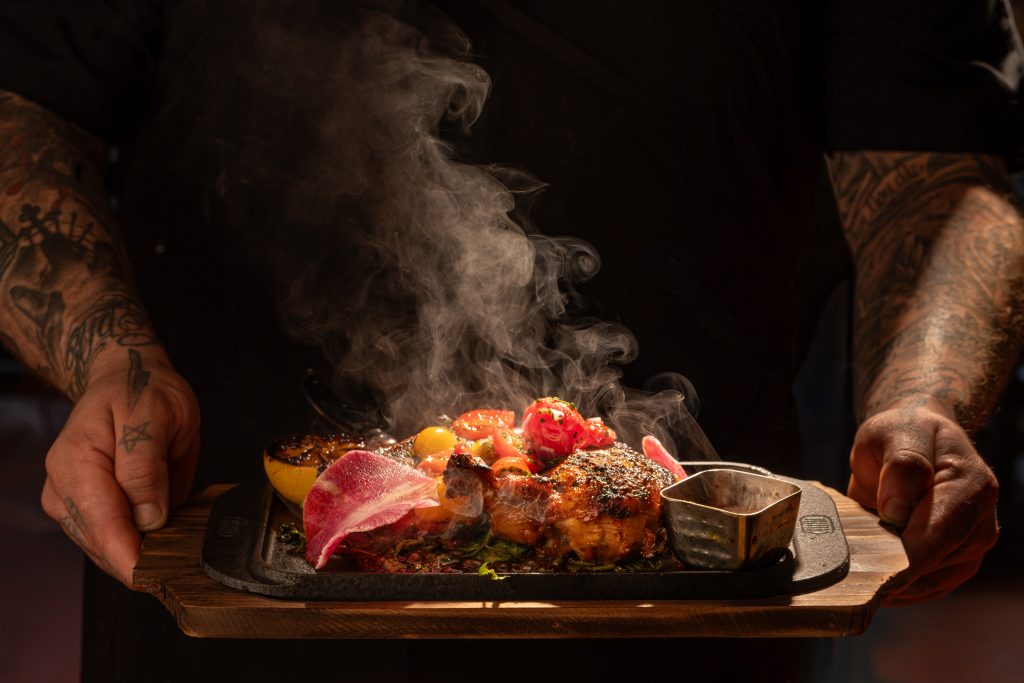
Chicken Inasal. // Photo by Jacob Lewkow, with photo assistant Nicholas Jamora
Michiganders have had a soft spot for Sunda New Asian since its flagship location opened in Chicago nearly two decades ago.
“A lot of people in Detroit became our best customers and friends,” says owner Billy Dec. After years of hearing requests for a local outpost, he finally brought the concept to District Detroit in March.
Dec wears many hats — television personality, actor, entrepreneur — but Sunda is rooted in a more personal story. As a Filipino American raised in Chicago, Dec spent years traveling between the U.S. and the Philippines, developing a deeper appreciation for the cultures and culinary traditions that shaped his family. Those experiences continue to inform Sunda’s broader approach, which draws inspiration from Japan, China, the Philippines, and Southeast Asia rather than any single national cuisine.
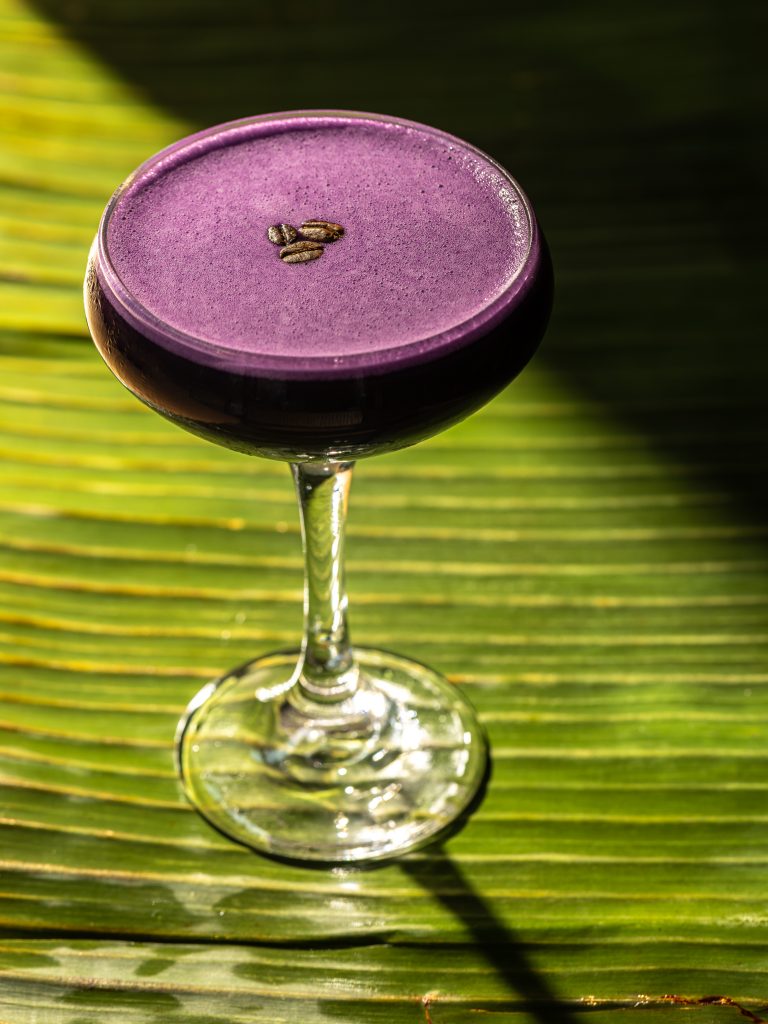
Ube Espresso. // Photo by Jacob Lewkow, with photo assistant Nicholas Jamora
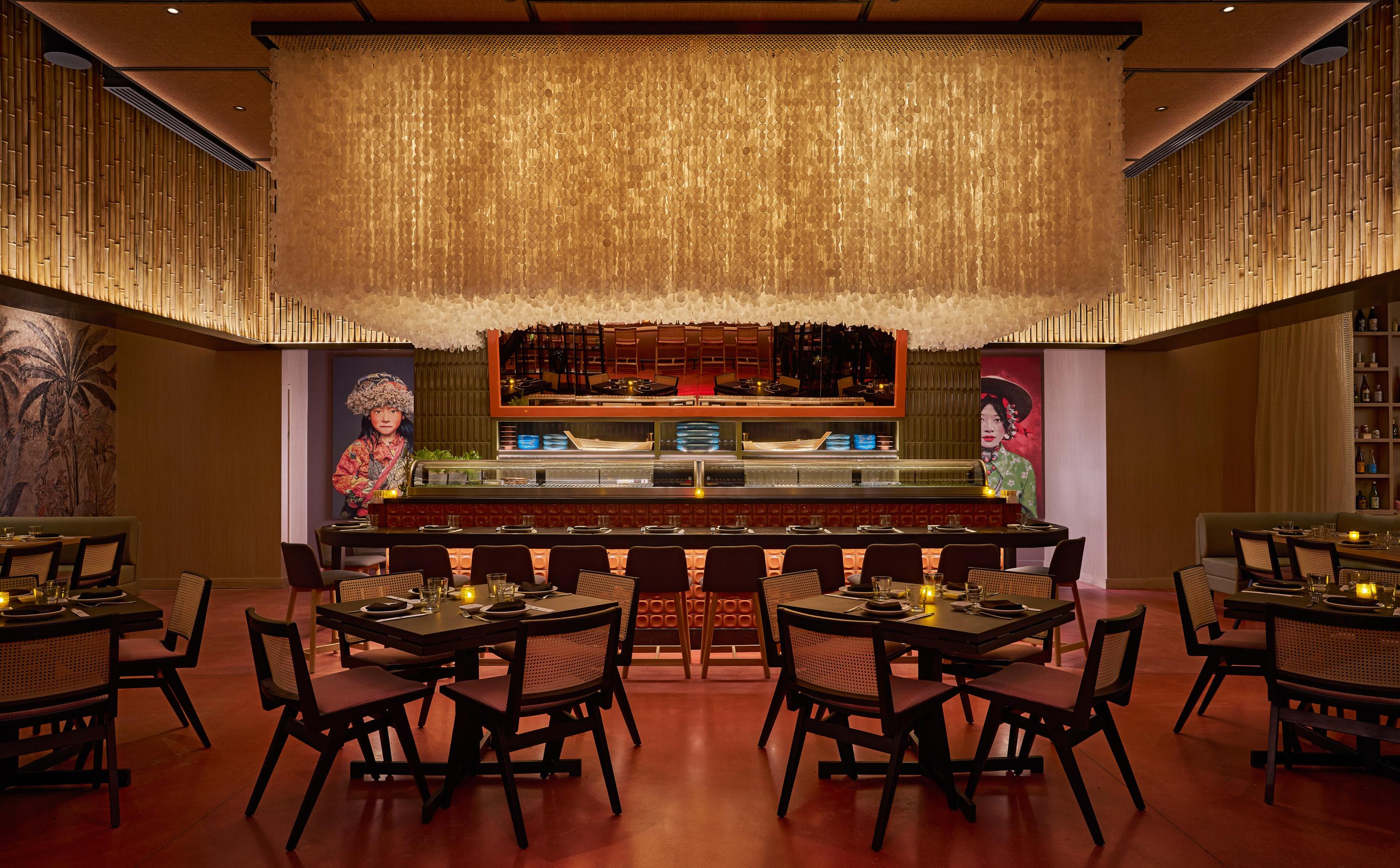
The 6,000-square-foot dining room reflects the same spirit of cultural exchange. Each Sunda location (including those in Nashville and Tampa) takes on a different personality. The Detroit restaurant leans into Japanese design influences. Shelving lined with bottles of sake stretches toward the ceiling, powder pink cherry blossoms glow above the bar, and Japanese-inspired landscape prints hang against botanical-patterned walls. Above the sushi station, a shimmering canopy composed of thousands of Capiz shells sourced from the Philippines catches the light pouring in through retractable floor-to-ceiling windows.
Culinary director Mike Morales, a Pampanga-born chef who has been with Sunda since its earliest days in Chicago, brings Dec’s vision to life in the kitchen alongside Tokyo native and head sushi chef Ise Matsunobu. Filipino heritage appears most clearly in Sunda’s version of a Kamayan feast, a dining tradition in which banana leaves cover tables packed with rice, meats, seafood, vegetables, and sauces intended to be shared communally and eaten by hand. Sunda miniaturizes the experience into a feast for four. The spread arrives loaded with adobo pork belly, crispy pata, chicken inasal, garlic shrimp, lumpia, jasmine rice, and an assortment of sauces.
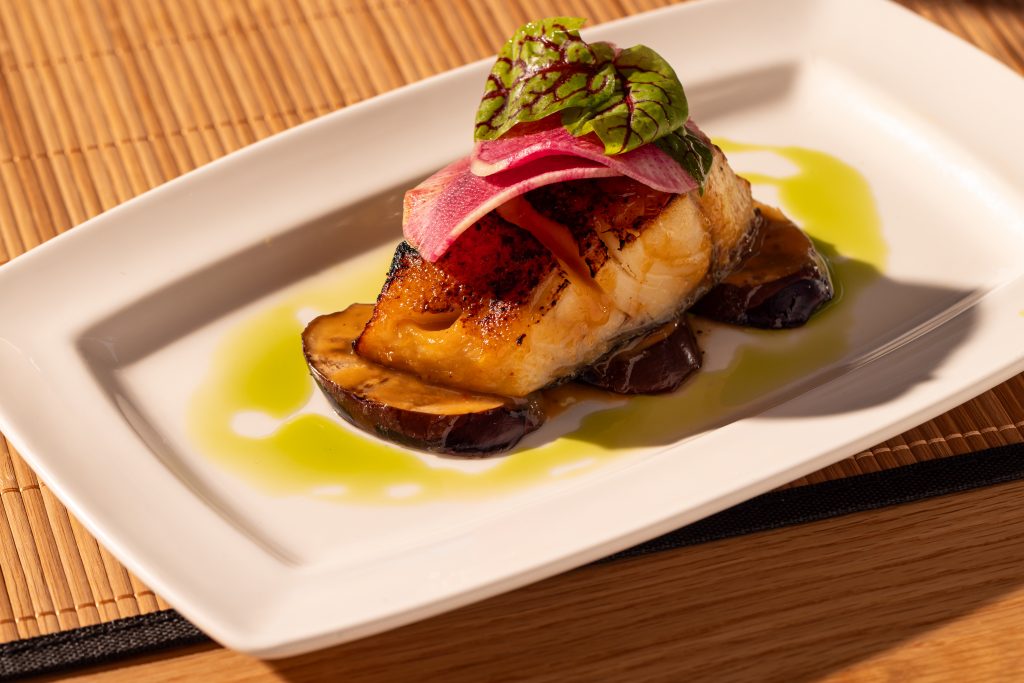
Miso Bronzed Black Cod. // Photo by Jacob Lewkow, with photo assistant Nicholas Jamora
The rest of the menu moves comfortably between regions. The restaurant’s signature oxtail pot stickers transform a familiar dumpling into a considerably richer and more indulgent bite, their slow-braised filling and caramelized onion jus lending the dish the depth of a long-simmered stew. Crispy rice topped with Wagyu balances richness and crunch, with the crackling rice providing a nice counterpoint to buttery beef and lingering chile heat.

Sunda Sundae. // Photo by Jacob Lewkow, with photo assistant Nicholas Jamora
Like Dec himself, Sunda resists simple categorization. The result is a restaurant that treats Southeast Asian cuisine not as a collection of borders but as a network of overlapping histories, influences, and traditions.
33 W. Columbia St., Detroit; 313-462-4847; sundanewasian.com/detroit.