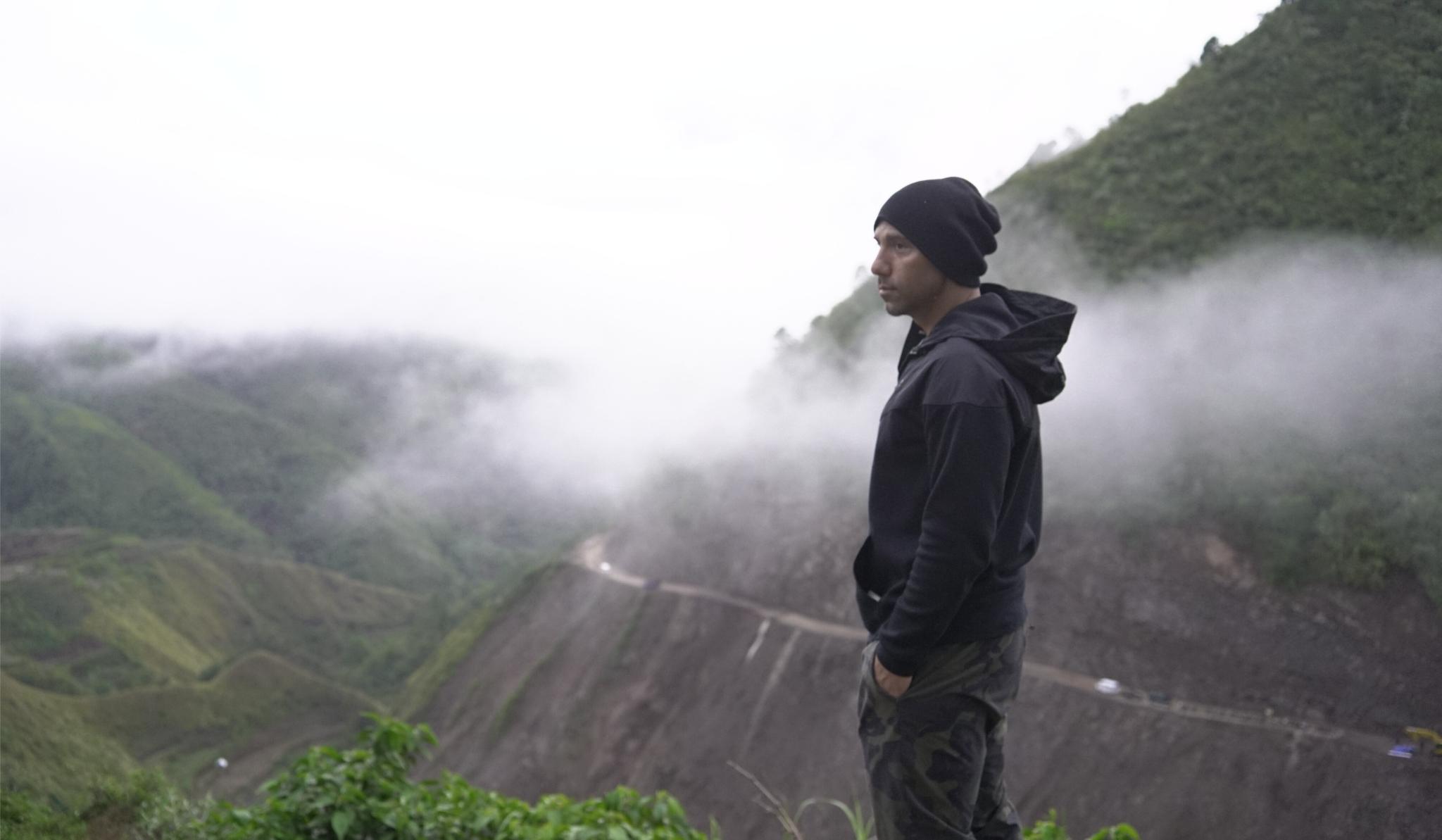
When Billy Dec opened the restaurant Sunda New Asian in 2009 in River North, the menu was roughly divided between dishes from China, Japan, and Southeast Asia, with the Philippines “slipped into” the last category, as Dec explains in his new documentary Food Roots, which airs on WTTW Monday, May 11 at 9:00 pm and is available to stream via the PBS app.
“I had to strategically figure out ways to introduce Filipino food,” Dec says. His mother is Filipino and he grew up eating the food of her homeland both at home and in humble mom-and-pop restaurants. But Filipino food was “never when you got dressed up or you were doing something that was upscale or of great value or you’re doing something cool or interesting or neat for a date or whatever. It was never an option for that,” he says. “All I wanted to do was that, but I couldn’t.” The downtown Chicago dining public was more interested in the American food at his nightlife spot Rockit Bar & Grill.
Almost two decades later, Chicago is in a golden age of Filipino food that’s attracting national attention, with everything from the first Filipino restaurant to win a Michelin star (Kasama) to a small bodega mashing up Filipino and Hawaiian flavors (Kanin) and plenty in between. It is into this changed environment that Food Roots, which follows Dec on a journey through the Philippines to learn family recipes, is released.
“I remember feeling so guilty when my Lola passed, she never wrote down her recipes, and all of my other cousins in the Philippines learned them because they were present,” Dec says of his grandma, a cherished cook. When two of his last three elders died on the same day, he decided to go to the Philippines and learn recipes from the surviving sibling, Lola Pilar. He brought along a film crew to document so that he didn’t have to worry about losing the stories or recipes in the moment.
That was in 2019. The footage didn’t feel like it had a satisfying documentary in it yet, Dec says. A new team of filmmakers eventually offered to help and dug into Dec’s personal story to add another narrative focused on the struggles of his father and brother with their mental health – a narrative that Dec felt was more important to share in the wake of the COVID-19 pandemic.
“The human side is the one that needs to be told,” Dec says the filmmakers convinced him. “If it could help anyone, if you could help one person deal with loss or challenge or confusion or obstacle or fear or mental illness, death. If it could help anybody, I felt like it just was beyond me.”
Food Roots ends up being an odyssey not just to the Philippines and its unique culinary traditions but also into Dec’s family’s past, and how it can be a source of pride and grief – and healing.